


What is Tuckpointing?
Tuckpointing and repointing are how masons repair the mortar joints that hold brick and stone together. We grind out the cracked, washed-out, or crumbling mortar, then pack in a fresh mix that matches the color, texture, and hardness of the original work.
In Seattle's rain, failed joints are how water gets into a wall, chimney, or patio. New mortar restores the bond, keeps water out, and makes the masonry look finished again, without rebuilding the whole structure.

Signs Your Masonry Needs Tuckpointing
Mortar wears out before brick does. If you notice any of these, it is time for a closer look.

Crumbling or Recessed Joints
Mortar sits back from the brick face or falls out when touched.

Gaps & Holes
Open joints let rain soak straight into the wall.

Stains or White Powder
Water marks and efflorescence mean moisture is moving through the joints.

Loose or Shifting Bricks
When mortar fails, bricks lose their grip.
Why Tuckpointing Matters
It Keeps Water Out
Intact joints are the first weather seal on brick and stone. Once mortar washes out, rain soaks the wall and works into the structure behind it.
The Wall Looks Finished Again
Color-matched, well-tooled joints clean up the whole wall. Done right, you can't pick out the repair from the original work.
It Costs Less Than a Rebuild
Catching washed-out joints early is almost always cheaper than tearing down and rebuilding a wall, a foundation, or a patio that has come apart.
It Holds the Masonry Together
Mortar is the bond. Replacing failed joints locks the brick or stone back in place so it stays stable for decades.

Before & After

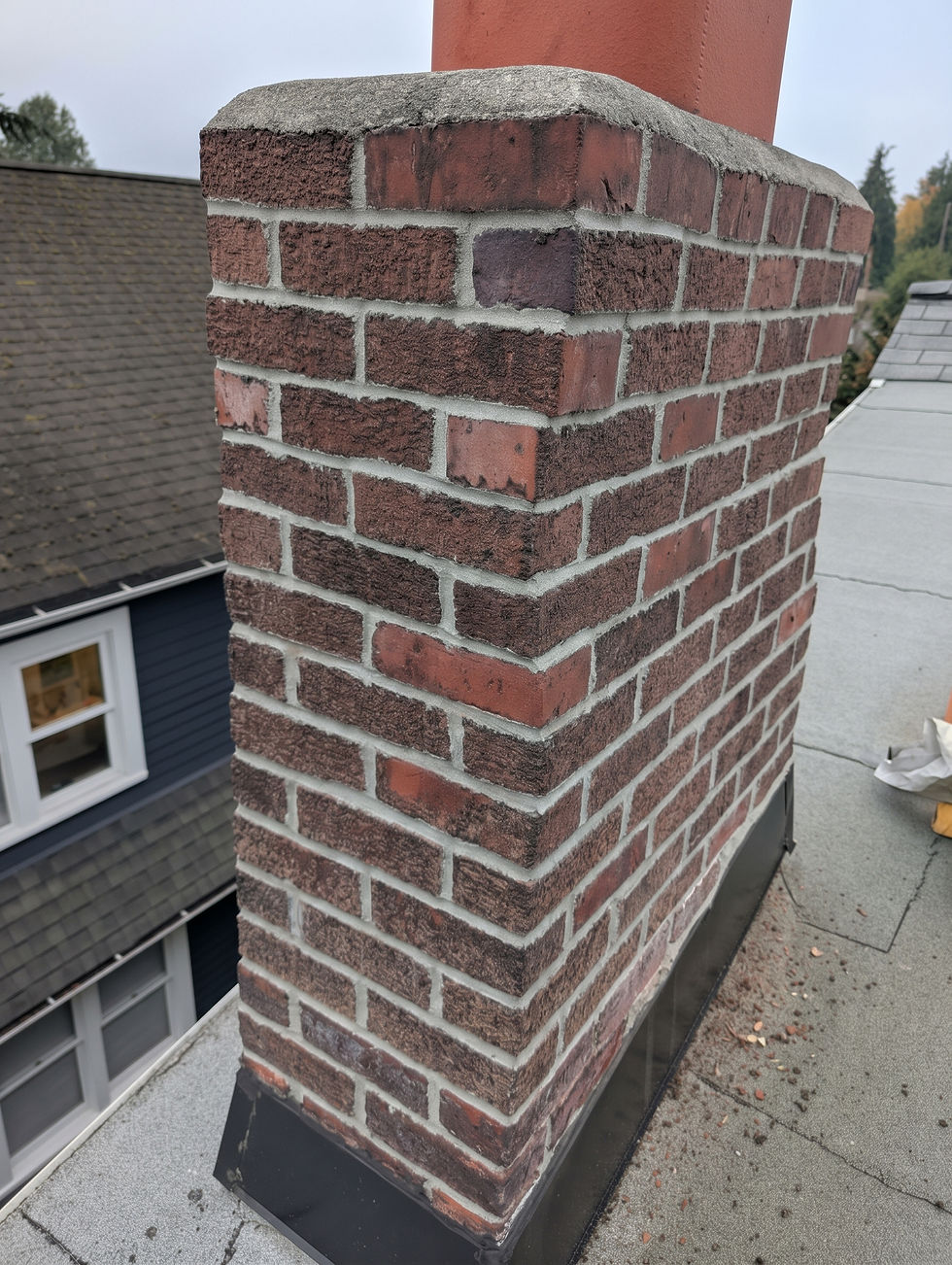
Chimney Tuckpointing I Wallingford, Seattle


Chimney Tuckpointing I Leschi, Seattle


Brick Column Tuckpointing I West Seattle, Seattle
Tuckpointing, Repointing, or Rebuilding?
Not every wall needs the same fix. Here is how the options compare.
Tuckpointing
Old mortar is ground out and replaced, then finished with a fine contrasting or matching joint line. Best when joints are worn but the brick is sound.
Repointing
Failed joints are raked out and refilled with a mortar matched to the original. The go-to repair for most aging brick and stone.
Rebuilding
Bricks are taken down and relaid. Only needed when the masonry itself is cracked, leaning, or loose. We will tell you honestly if you do not need it.
Why the Mortar Mix Matters
Mortar should always be softer than the brick around it.
Mortar is meant to be softer than the brick around it. That way, when walls move or water freezes, the joint takes the stress instead of the brick.
Many older Seattle homes were built with soft lime mortar. Patching them with hard modern cement can trap moisture and crack the brick faces. We match the mix, color, and texture to what your wall was built with, so the repair lasts and blends in.
